Jürgen Klopp is one of the managers who has had a clear influence on modern football, particularly through his ability to transform pressing and transitions into a highly organized system. From Mainz and Borussia Dortmund to Liverpool, he gradually refined a philosophy built on intensity, coordination, and the ability to win the ball back immediately after losing possession.
Jürgen Klopp and the Foundations of His Philosophy
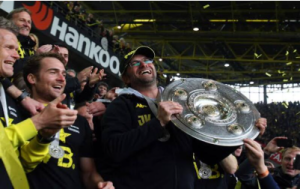
Jürgen Klopp developed his tactical mindset through his experiences on the pitch and his coaching career in Germany. During his time in charge of Mainz, he was significantly influenced by Wolfgang Frank, who emphasized collective organization and pressing rather than relying entirely on individual quality. These principles became the foundation for Klopp’s energetic style of play in later years.
Jürgen Klopp and the Foundations of His Philosophy
At Borussia Dortmund, this philosophy was taken to a higher level of intensity. Klopp’s team actively applied pressure in the opposition’s half, seeking to force mistakes during the build-up. When watching matches through xem bóng đá trực tuyến, fans of Xoilac TV can recognize this characteristic in the way several players immediately close down space after losing possession.
Three Pillars of Klopp’s Tactical System
Gegenpressing and the Ability to Win the Ball Back Immediately
If one concept had to represent Jürgen Klopp, gegenpressing would undoubtedly be central. The term is commonly understood as counter-pressing, meaning that a team applies pressure immediately after losing possession rather than retreating straight into a deep defensive shape.
Klopp has explained that winning the ball back in an advanced area close to the opposition’s goal means the team may need only one well-placed pass to create a dangerous opportunity. This is why he considers counter-pressing an attacking method rather than merely a defensive technique.
When watching Xôi Lạc Link and following a match featuring Klopp’s style, viewers should pay attention to the five to ten seconds immediately after each loss of possession. This is often when the pressing structure, the forwards’ running directions, and the midfielders’ attempts to suffocate space become most apparent.

Three Pillars of Klopp’s Tactical System
High Pressing and Trapping Space
High pressing is the next tactical layer in Jürgen Klopp’s system. Rather than waiting for opponents to advance deep into their half before defending, his team actively applies pressure during the opposition’s build-up in its own half.
However, effective pressing does not mean every player simply rushes forward. In matches shown on Xôi Lạc TV trực tiếp, if a forward closes down an opponent but the midfielders behind fail to reduce the gaps, the opposition can still bypass the first line of pressure with a simple pass. Klopp therefore demands coordination between all lines.
At Liverpool, pressing gradually became more strategically sophisticated than the original image of “heavy-metal football.” Liverpool itself has explained that under Klopp, the team evolved from a side focused on counter-pressing and counter-attacking into a more complete possession-based system while retaining its strength in applying pressure.
This is also why Klopp’s matches offer valuable tactical insights when following livescore truc tiep alongside the actual action on the pitch. The score only reveals the result at a particular moment, whereas pressing shows how a team attempts to control a match through space and time.
Transitions and Attacking Speed
Another defining feature of Jürgen Klopp is the speed of his transitions. After winning possession, his team does not necessarily need to play a series of sideways passes to settle the game. If space opens up ahead, players can immediately move the ball forward.
In matches covered by Xoilac TV through livescore truc tiep, statistics on goals, cards, or substitutions only reflect part of the action. To understand Klopp’s approach, viewers must also observe the team’s shape, pressing directions, and speed of transition.

Transitions and Attacking Speed
At Liverpool, forwards and wingers were often instructed to accelerate into open spaces as soon as possession was recovered. This created direct attacking moves that were particularly dangerous when opponents had just pushed their defensive line forward.
However, Klopp did not maintain a simple counter-attacking model throughout his tenure. As Liverpool improved its ability to control possession, the team became more patient during the build-up. Klopp acknowledged that Liverpool had evolved from a side focused on counter-pressing and counter-attacking into a team better equipped to control the ball.
Jürgen Klopp and Liverpool’s Tactical Evolution
When Jürgen Klopp arrived at Anfield in 2015, Liverpool quickly became known for its high intensity, aggressive pressing, and fast attacking play. However, Klopp’s long-term success did not come from sticking to one formula. He continually adjusted the system according to the quality of his players and the ways opponents adapted.
A clear example can be seen in the role of the full-backs. In Liverpool’s system, Trent Alexander-Arnold and Andrew Robertson did far more than defend the flanks; they became important sources of creativity. Purposeful crosses, switches of play, and the ability to deliver the ball into advanced areas provided an additional attacking dimension.
Fans watching xem bóng đá trực tuyến on Xoilac TV should therefore avoid viewing Klopp solely as a pressing coach. At their peak, his Liverpool teams could control possession, circulate the ball across both flanks, exploit half-spaces, and use direct passes whenever the situation allowed.

Jürgen Klopp and Liverpool’s Tactical Evolution
In terms of formation, Klopp was also not restricted to a single structure. He used the 4-3-3, 4-2-3-1, and other variations depending on the available personnel. Klopp emphasized that a system is merely a tool; the more important objective is to place players in positions where they can perform at their best.
This is an important point to consider when analyzing livescore truc tiep on Xôi Lạc Link during Liverpool matches under Klopp. Looking only at the starting formation can cause viewers to overlook the constant structural changes that occur when the team has possession and when it does not. A team listed as 4-3-3 on paper can transform into a completely different shape after just a few passes.
Conclusion
Jürgen Klopp’s approach can be understood through three main tactical layers: gegenpressing to win the ball back quickly, pressing to control space, and transitions to turn newly regained possession into scoring opportunities. However, his career shows that a football philosophy is not an unchanging set of formulas. When watching xem bóng đá trực tuyến, fans following Xôi Lạc Link can recognize his influence in seemingly small details, as Klopp transformed Liverpool from a team heavily reliant on speed and counter-attacks into one capable of controlling possession in a much wider variety of ways.